What Is Chloride and Why Does It Matter in Water Chemistry & Quality?
Water quality is influenced by several chemical parameters, and chloride (Cl⁻) is one of the most important. While chloride is naturally present in water, excessive concentrations can affect industrial processes, equipment life, and environmental compliance. Regular monitoring helps industries maintain efficient operations and protect water resources.
What Is Chloride?
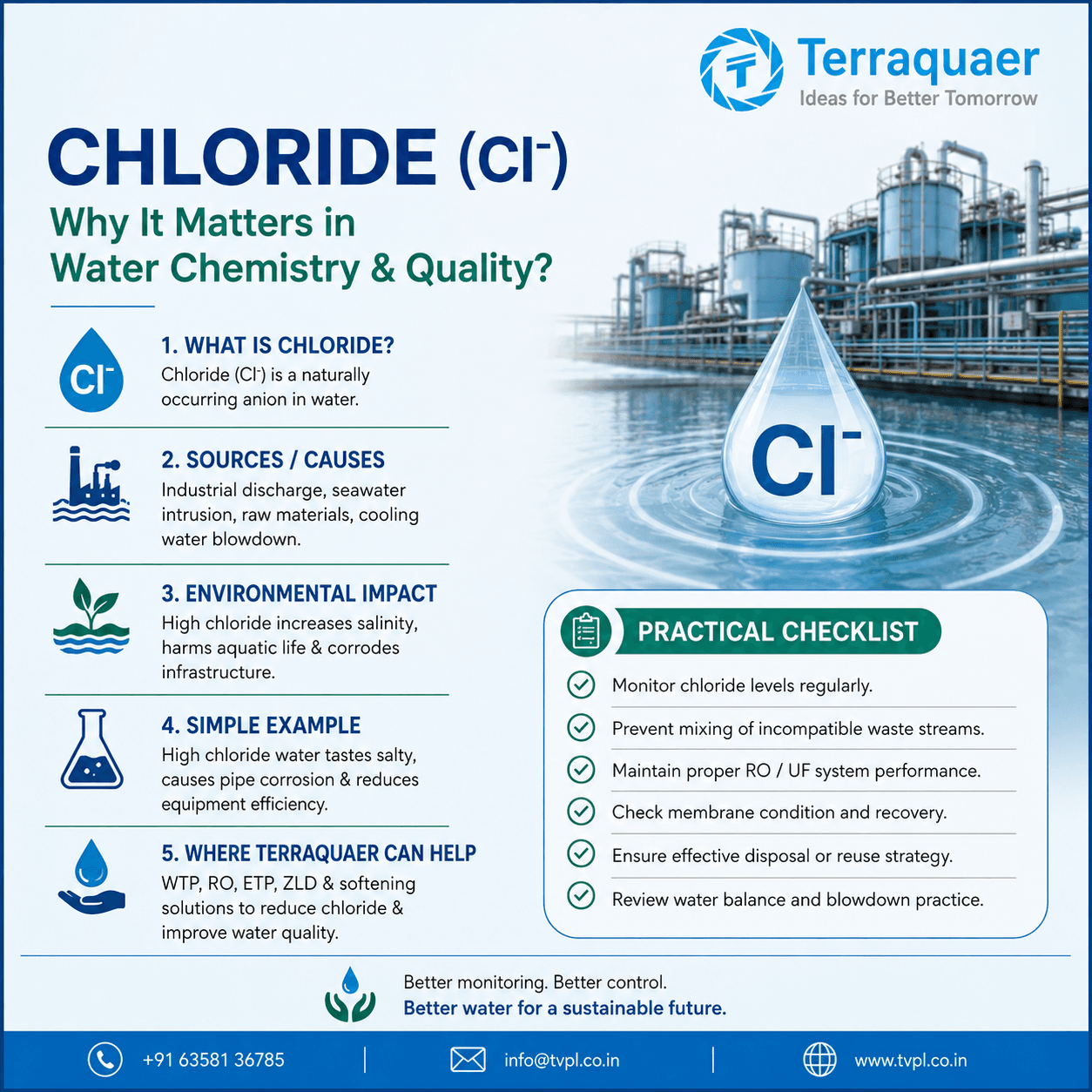
Chloride (Cl⁻) is a naturally occurring dissolved ion found in surface water, groundwater, seawater, and industrial water systems. It is formed when chlorine combines with other elements such as sodium, calcium, or potassium.
In moderate concentrations, chloride is generally not harmful. However, high chloride levels can create operational and environmental challenges.
Common Sources of Chloride
Chloride can enter water through both natural and industrial activities.
Some common sources include:
- Industrial wastewater discharge
- Seawater intrusion in coastal areas
- Cooling tower blowdown
- Process chemicals and raw materials
- Domestic sewage
- Road salts and runoff (in some regions)
Industries located near coastal regions or using high-salinity raw water often experience elevated chloride concentrations.
Why Does Chloride Matter?
Although chloride itself is not highly toxic, excessive levels can significantly impact industrial water systems.
High chloride concentrations may lead to:
- Increased water salinity
- Corrosion of pipelines, pumps, tanks, and boilers
- Reduced equipment life
- Lower efficiency of RO and membrane systems
- Challenges in meeting discharge standards
Monitoring chloride is therefore essential for maintaining reliable plant performance and reducing maintenance costs.
Simple Industrial Example
Consider a manufacturing plant using groundwater for cooling and process applications.
If chloride levels gradually increase:
- Cooling water becomes more corrosive.
- Pipelines and heat exchangers experience faster deterioration.
- RO membrane performance may decline.
- Maintenance frequency and operating costs increase.
Regular water analysis helps identify these changes early, allowing corrective actions before equipment damage occurs.
Practical Checklist for Chloride Management
A few simple practices can help industries manage chloride effectively:
✔ Monitor chloride levels through regular water testing.
✔ Prevent mixing of incompatible waste streams.
✔ Maintain RO and UF systems for consistent performance.
✔ Inspect membrane condition and recovery regularly.
✔ Follow proper wastewater disposal or reuse practices.
✔ Review overall water balance and cooling tower blowdown cycles.
Routine monitoring can prevent operational issues and support long-term system reliability.
How Terraquaer Can Help
Terraquaer provides integrated water and wastewater treatment solutions that help industries manage water quality and improve process efficiency.
Our solutions include:
- Water Treatment Plants (WTP)
- Reverse Osmosis (RO) Systems
- Effluent Treatment Plants (ETP)
- Zero Liquid Discharge (ZLD) Systems
- Water Softening Solutions
- Operation & Maintenance (O&M) Services
We work with industries to optimize water treatment performance, improve equipment reliability, and support compliance with applicable environmental standards.
Conclusion
Chloride is a simple but important water quality parameter. While it naturally exists in water, excessive concentrations can affect infrastructure, treatment efficiency, and environmental performance.
By monitoring chloride regularly and maintaining appropriate treatment systems, industries can improve operational efficiency, reduce corrosion risks, and ensure sustainable water management.
Need support in optimizing your water treatment system? Terraquaer offers customized solutions to help industries monitor, treat, and manage water quality effectively.