UF Membrane Fouling in ETP and STP: Pretreatment, TMP and Cleaning Guide

Ultrafiltration is a reliability decision, not just a polishing step.
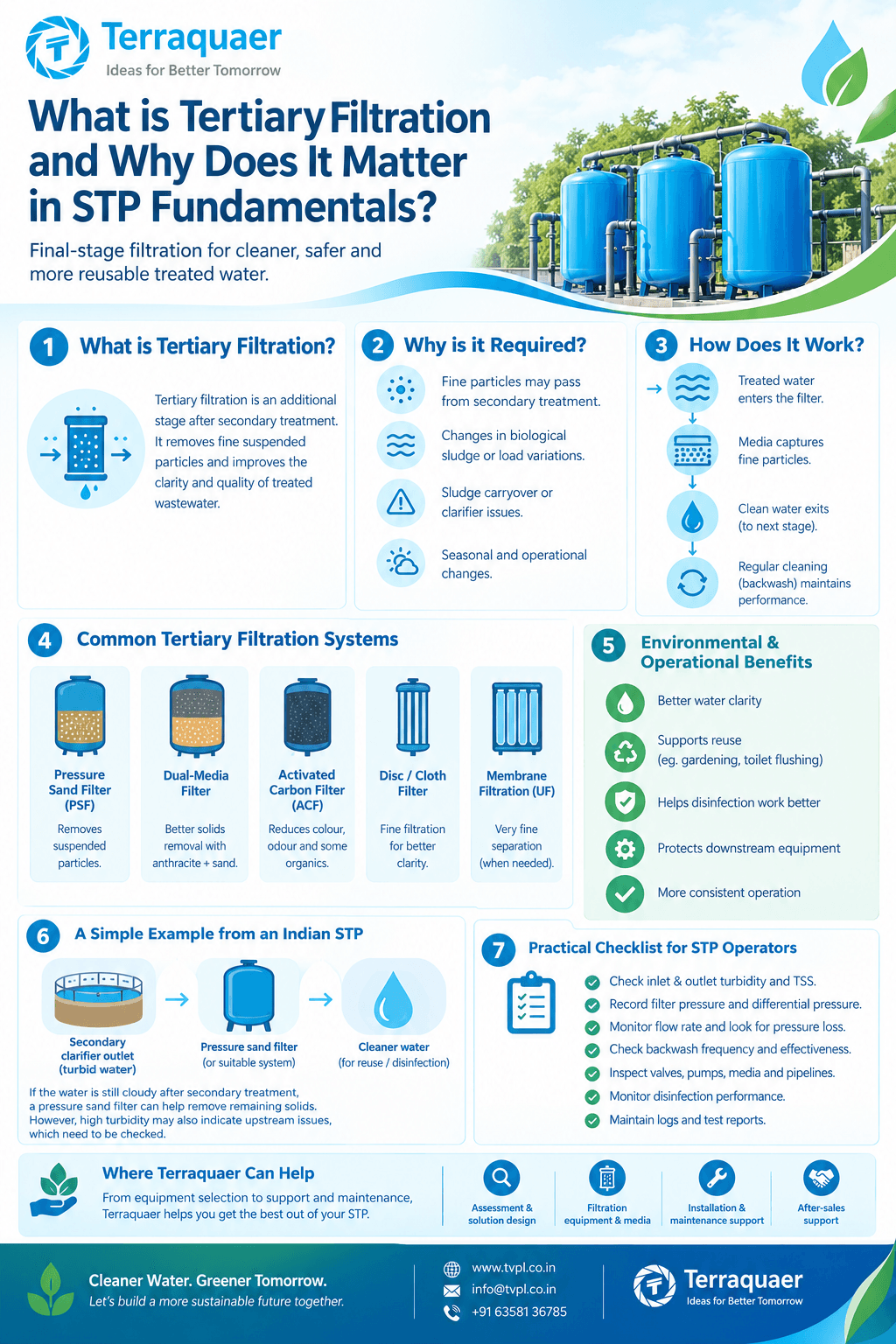
For ETP and STP operators planning treated-water reuse or dependable RO pretreatment, ultrafiltration (UF) is often selected for its compact footprint and consistent solids barrier. But a UF plant does not solve a variable influent by itself. Stable performance comes from matching pretreatment, membrane configuration, operating setpoints and cleaning to the actual wastewater.
What UF removes—and what it does not
UF is a pressure-driven membrane process that retains suspended solids, colloids, oil droplets, biomass and high-molecular-weight organics while allowing water and many dissolved salts to pass. That makes it useful downstream of biological treatment or physico-chemical clarification when the target is low turbidity, downstream RO protection or reuse polishing. UF is not a substitute for RO where dissolved TDS must be reduced, and it is not a substitute for source control where a process stream contains incompatible solvents, oxidants or extreme variability.
Start with a feed-water and reuse objective
Define the reuse destination before sizing the membrane: cooling-tower makeup, wash water, gardening, utility reuse or RO feed each needs a different treatment train and risk review. Test representative and upset-condition samples for pH, temperature, turbidity, TSS, COD, oil and grease, hardness, iron, manganese, silica, surfactants and microbial activity. Establish the applicable consent conditions and reuse-quality requirements with the relevant authority; national guidance is not a replacement for site-specific consent requirements.
Build the pretreatment train around the foulant
Large debris and fibre: screening and correctly selected prefiltration protect pumps and membrane channels.
High TSS or poor settling: improve equalization, coagulation-flocculation, clarification or media filtration before UF.
Oil and grease or emulsions: use segregation, free-oil removal and suitable chemical or physical pretreatment before the membrane.
Biological solids and variable organics: stabilize upstream biological treatment and maintain a disciplined backwash and maintenance-clean program.
Scale-forming or dissolved contaminants: assess the downstream RO or reuse process separately; UF alone does not remove most dissolved salts.
Use four operating signals together
Do not judge UF health from outlet clarity alone. Trend normalized permeate flow or flux, transmembrane pressure (TMP), feed and permeate quality, and backwash/chemical-clean frequency. A rising TMP at the same normalized flux, falling flux at the same TMP, shortening run time, or increasing cleaning demand indicates that the plant needs investigation. Temperature changes affect viscosity and can change flux; normalizing the operating data prevents false conclusions.
Set an operating philosophy before commissioning
Commissioning should establish clean-water baseline values, the design flux window, recovery and backwash sequence, acceptable TMP trend, alarm limits, and a cleaning decision tree. Programme automatic backwash and air scour only as permitted by the selected membrane and skid design. Select cleaning chemicals, concentration, contact time and neutralization route from the membrane supplier’s compatibility guidance. Never transfer a chemical recipe between membrane materials without confirming compatibility.
Treat UF backwash and cleaning streams as process streams
Backwash water, chemically enhanced backwash and clean-in-place effluent can carry concentrated solids and residual chemicals. Include their collection, equalization, return, treatment or authorized disposal in the water balance. Recycling may improve recovery in some plants, but only after confirming it will not recirculate oil, salts, biomass or cleaning residues back to the membrane.
A practical troubleshooting sequence
Verify instruments and compare current values with the clean baseline.
Check equalization, upstream solids separation and chemical dosing before increasing membrane cleaning.
Review recent process changes: production, raw materials, pH excursions, oil carryover, biology upset and temperature.
Inspect prefilters, valves, backwash performance and air-scour supply where applicable.
Use vendor-approved cleaning only after identifying likely organic, inorganic, biological or particulate foulants.
Confirm recovery after cleaning and document the cause, response and next preventive action.
Where UF fits in an ETP/STP reuse train
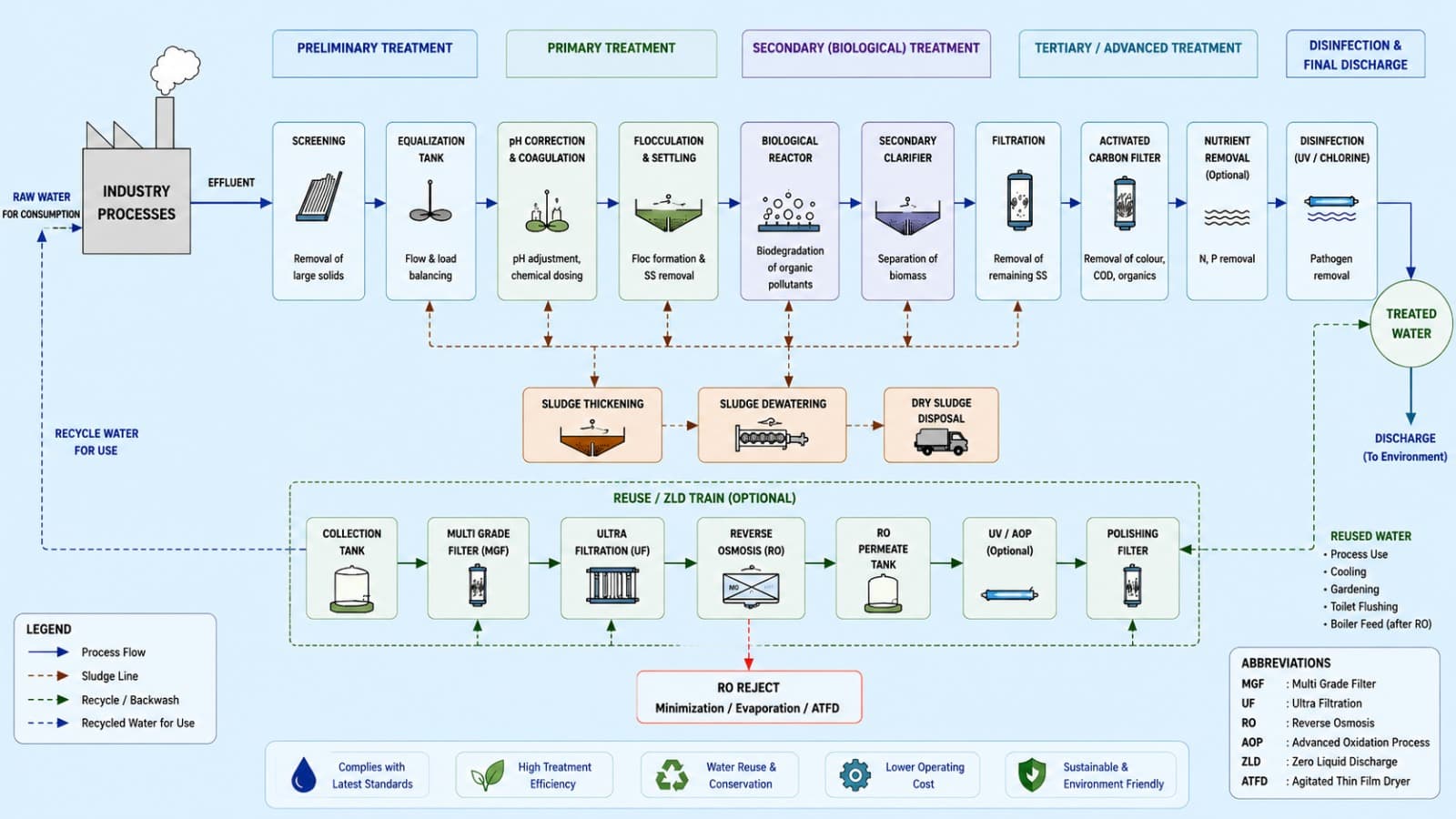
A typical site-specific train may combine equalization, pH correction, coagulation-flocculation, clarification or biological treatment, UF, disinfection and—when dissolved salts must be controlled—RO with suitable reject management. The sequence changes with wastewater chemistry, final reuse point, space, power, operator capability and local compliance obligations. Pilot testing is particularly valuable for mixed industrial effluent, high oil loads, colour, surfactants and frequent batch changes.
How Terraquaer approaches UF projects
Terraquaer can evaluate the full treatment train rather than treating UF as an isolated package: feed characterization, water balance, upstream conditioning, UF/RO integration, automation and monitoring, reject and residuals planning, commissioning support, operator training and ongoing O&M. This EPC/EPCC and O&M perspective helps align membrane performance with reuse goals, plant availability and compliance documentation.
The decision checklist
Before issuing a UF enquiry, prepare at least three months of operating data where available, laboratory analysis for normal and upset conditions, flow pattern and peak flow, reuse target, layout constraints, utilities, existing treatment equipment, discharge/consent conditions, and the preferred responsibility split for design, execution and O&M. A clear brief produces a more dependable UF design than selecting a membrane on nominal flow alone.