Greywater Treatment Plant Design for Reuse: Segregation, Treatment and O&M
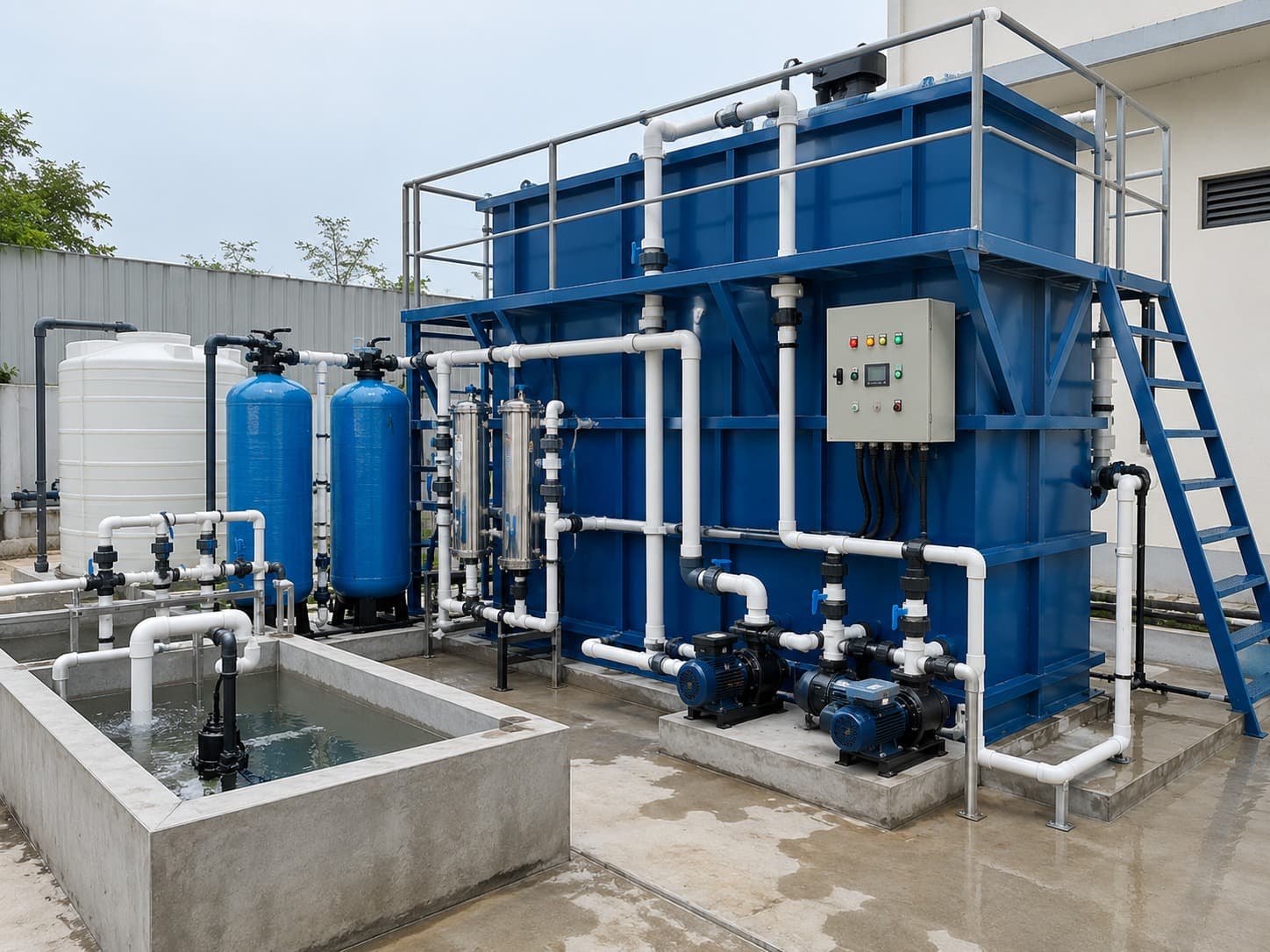
Greywater reuse succeeds when source separation, fit-for-purpose treatment and operations are designed together.
Greywater treatment is often proposed to reduce freshwater demand for toilet flushing, landscaping and other approved non-potable uses. The opportunity is real, but performance is determined before the plant starts: which streams are collected, how quickly they are treated, what reuse demand exists each day, and how the reuse network is protected from potable water. A greywater treatment plant (GWTP) should therefore be designed as a complete collection-to-reuse system, not as a stand-alone tank-and-filter package.
Start by defining the stream and the reuse objective
Define greywater at the project boundary and keep it segregated from toilet wastewater, clinical or laboratory streams, concentrated kitchen waste, solvents and other incompatible discharges. Shower, bath, washbasin and laundry flows may have very different solids, detergent, oil, temperature and microbiological characteristics. Map each source, its hourly flow profile, peak events and access for maintenance before finalising capacity.
Then set the approved end use: toilet flushing, restricted landscape irrigation, cooling or another non-potable duty. The intended use determines treatment barriers, storage, distribution safeguards, monitoring and operator response. Do not treat a generic “reuse water” target as a design basis; the applicable local authority, consent and project requirements govern the final criteria.
Survey source flows across normal, peak and low-occupancy days—not only a design occupancy estimate.
Test representative water for pH, turbidity, TSS, COD or BOD, oil and grease where relevant, detergents/surfactants and microbiological indicators.
Make a daily water balance for generation, treatment capacity, treated-water storage, reuse demand, overflow and a compliant backup path.
Use a treatment train that matches the actual greywater
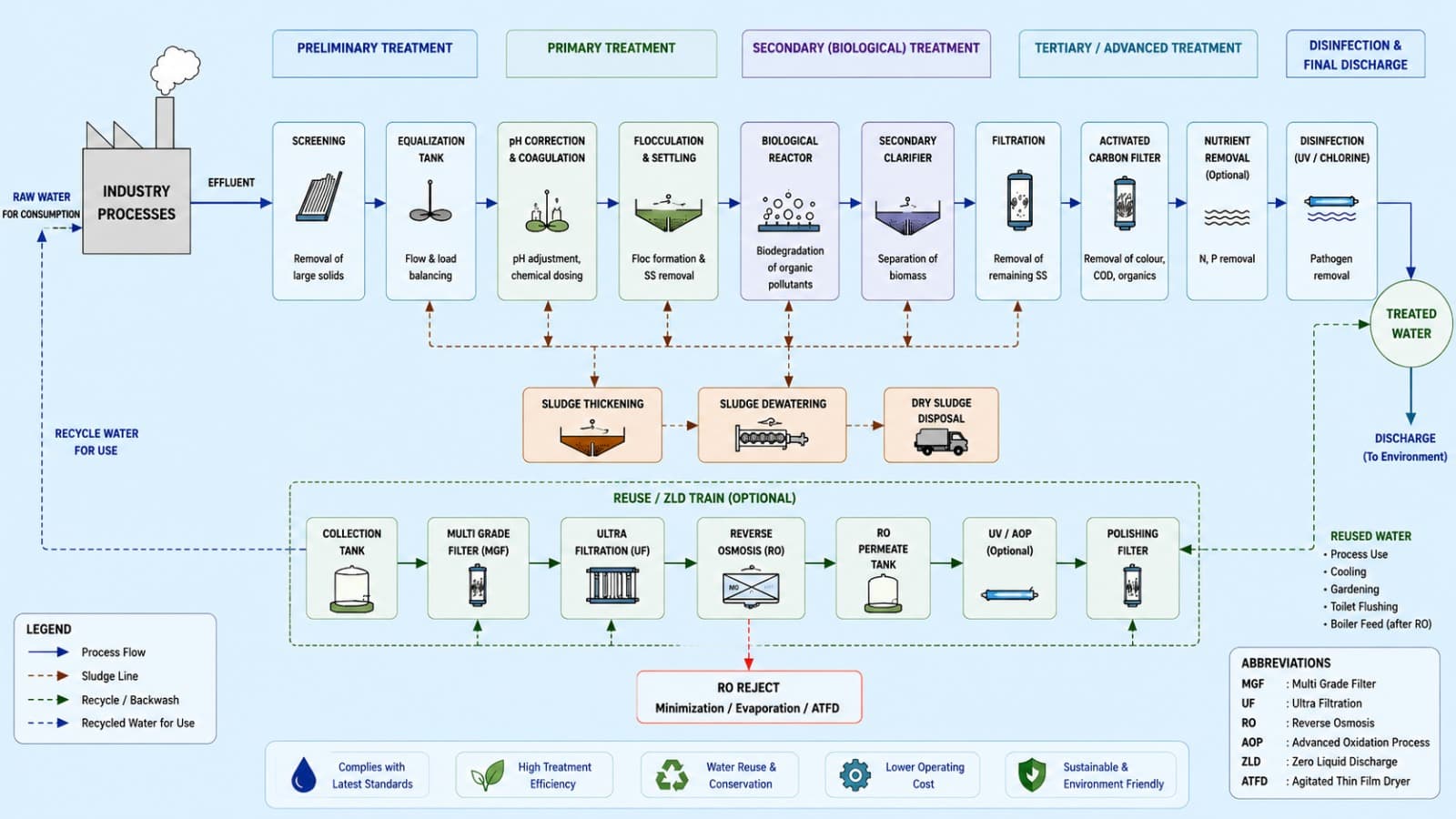
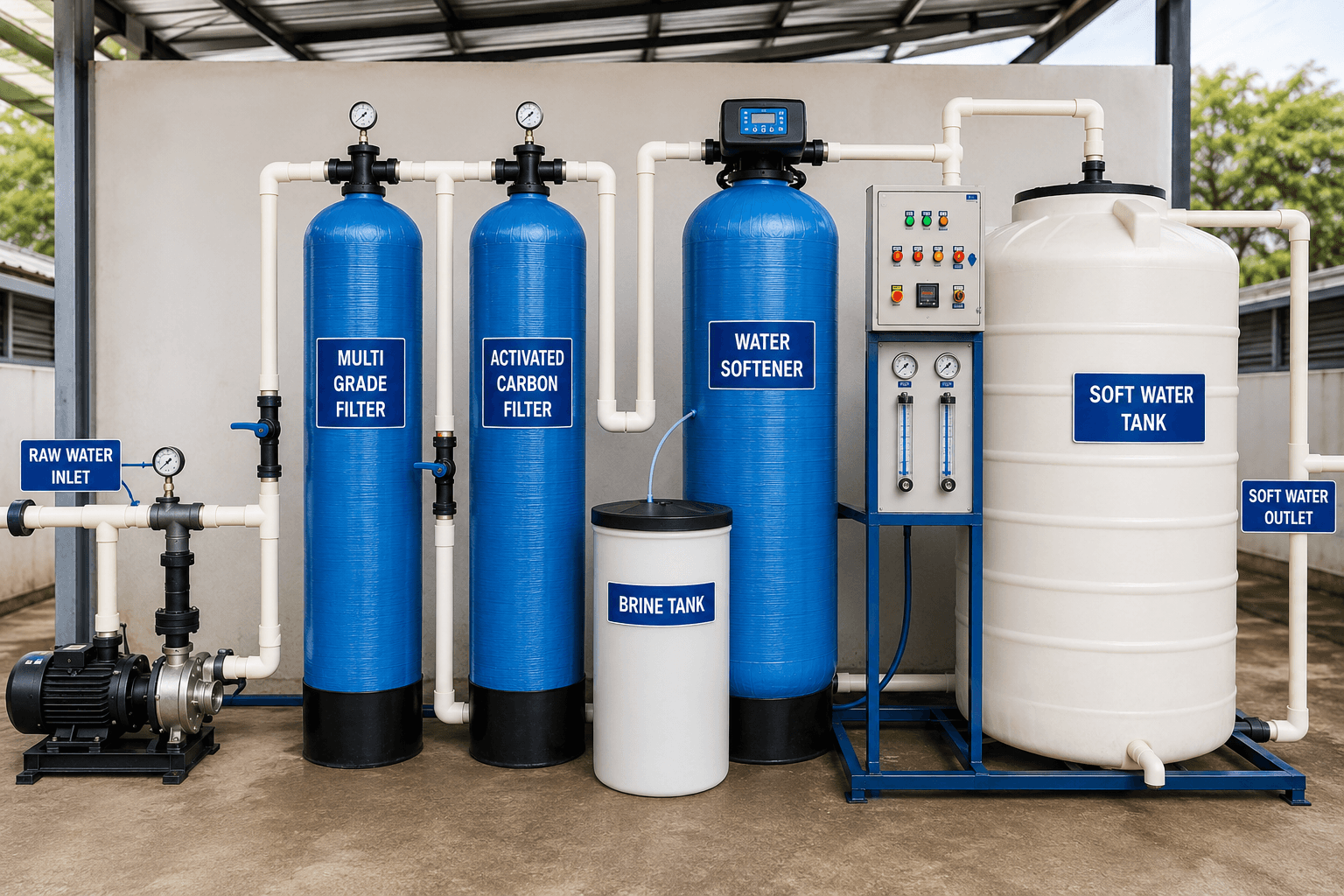
A typical GWTP may include screening for hair, lint and debris; equalisation to dampen flow and quality swings; biological treatment for biodegradable organics; clarification or membrane separation; filtration; disinfection where required; and treated-water storage with controlled distribution. The appropriate configuration depends on the source quality, footprint, energy availability, reuse target and the capability to operate the system.
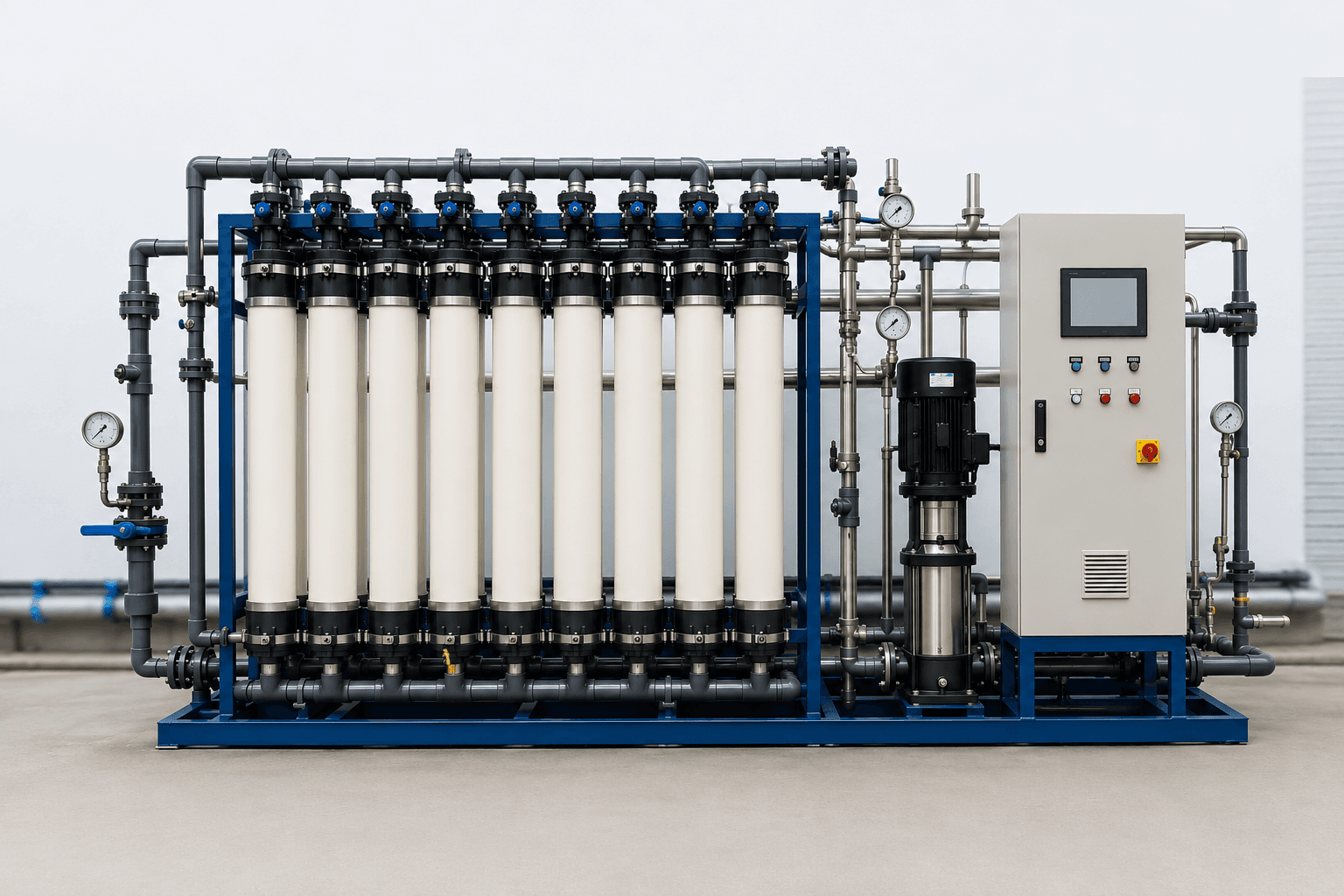
Screens and equalisation are not optional details: poor solids control causes pump blockage and filter loading, while long untreated storage can create odour, anaerobic conditions and unstable downstream performance. Where conventional biological treatment is selected, provide a robust solids-separation step. Where membranes are selected, provide protection, cleaning access and operating limits based on the expected foulants.
Design the reuse network as carefully as the treatment plant
Non-potable water must be physically separated from potable water. Provide dedicated, clearly identified piping, valves, tanks and outlet labelling; backflow and cross-connection safeguards; commissioning checks; and documented procedures for isolation and repair. Storage needs to be sized around real demand and water-quality control, not simply maximum available volume. Stagnant storage can undermine treatment performance.
Provide level controls and a defined response for full treated-water tanks, low demand, a treatment upset, loss of disinfection, power failure and emergency bypass. If potable top-up is permitted, its connection and backflow protection must follow the approved design. The treated-water distribution design should make an unintended potable connection difficult to create and easy to detect.
Build monitoring and O&M into the design
For reuse systems, reliability is a public-health and facility-management outcome. Include flow measurement on influent and treated water, tank levels, pump and blower run feedback, filter differential pressure where applicable, and the disinfection or quality indicators required by the approved operating plan. Define who reviews alarms, what action is taken, and when reuse is stopped.
Daily: inspect screens, tank levels, pumps, blowers, leakage, odour and reuse-line pressure; record abnormal events.
Routine: clean screens, maintain aeration and filtration, verify instruments, manage sludge or residuals, and check disinfection performance as specified.
Periodic: test treated-water quality at the agreed frequency, review demand against production, inspect labels and cross-connection controls, and update maintenance records.
Avoid common GWTP failure modes
Many poor outcomes originate outside the biological reactor. Unsegregated blackwater or kitchen discharge changes the design load; oversized storage causes low turnover; undersized screens and inaccessible equipment delay maintenance; and a reuse system without demand can force prolonged storage or overflow. Another frequent mistake is copying a treatment train or water-quality target from a different building without validating the present sources, occupancy, plumbing and approval conditions.
Address failures with a practical hierarchy: protect source segregation, stabilise collection and equalisation, confirm biological and filtration performance, control disinfection and storage, then verify the distribution system. A water balance and trend review should be part of every corrective-action investigation.
A practical commissioning checklist
Confirm source plumbing and exclude prohibited connections before wet commissioning.
Validate flow, equalisation, treatment performance and reuse demand against the approved design basis.
Test alarms, standby equipment, interlocks, isolation valves and the response to loss of power or disinfection.
Commission the non-potable distribution network, labels and cross-connection safeguards before releasing water to end uses.
Hand over SOPs, test schedules, maintenance plans, spares lists and operator training records.
How Terraquaer supports greywater reuse projects
Terraquaer can deliver greywater reuse as an integrated EPC/EPCC and O&M programme: source and reuse water-balance assessment, process selection, compact or civil plant engineering, filtration and disinfection, pumping and dual-plumbing interfaces, automation, commissioning, operator training and ongoing performance review. The objective is not a generic GWTP, but a maintainable treatment and reuse system aligned to the facility, its approved end use and site-specific compliance conditions.
Information to prepare for a design review
Share plumbing drawings, source segregation details, occupancy and flow data, representative water analysis, available footprint and utilities, target reuse applications and demand profile, existing STP interfaces, site approval conditions, preferred automation level, storage constraints and the responsible O&M model. These inputs allow a defensible treatment, storage and distribution design.