improving life cycle thinking performance in an industrial site
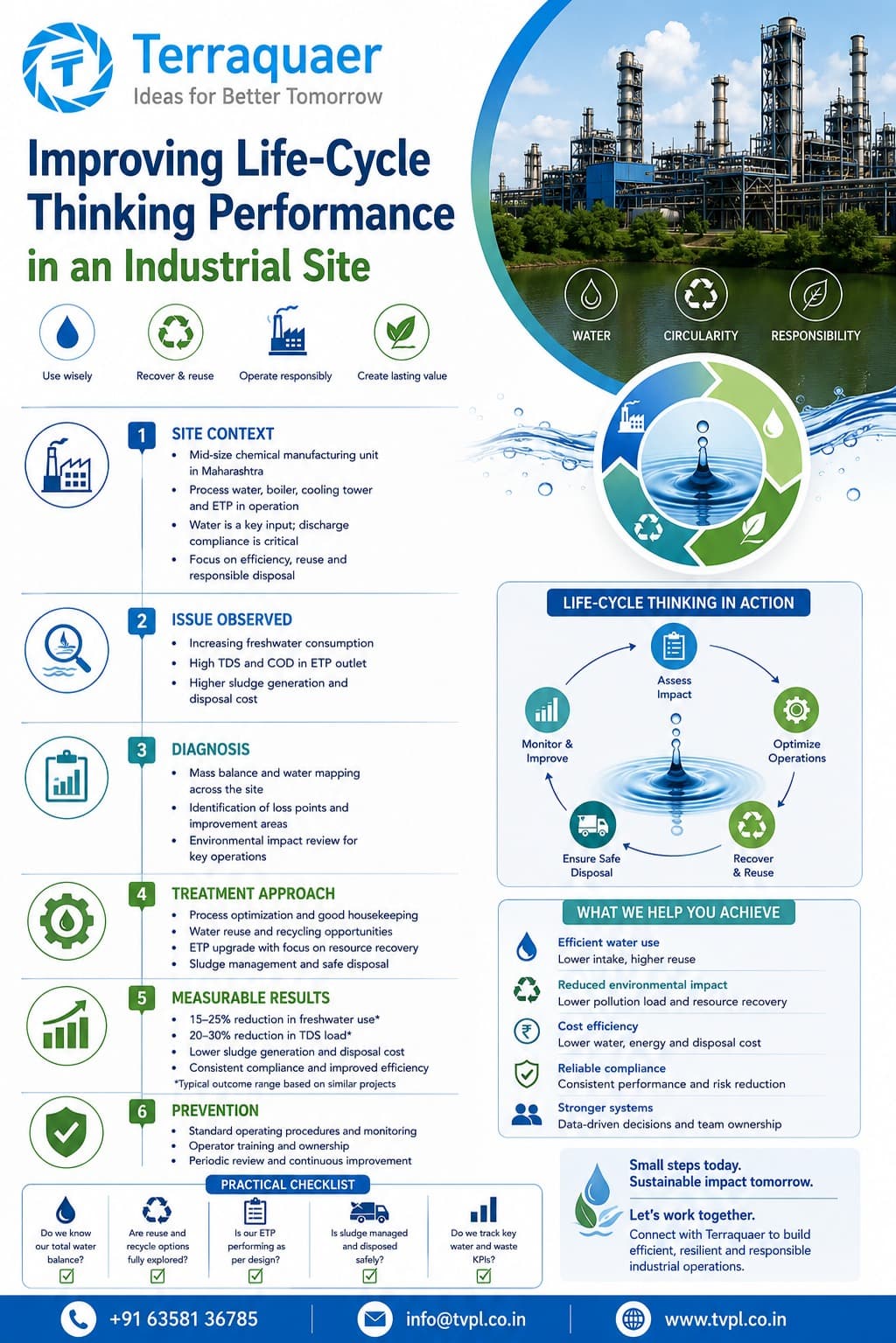
Improving Life-Cycle Thinking Performance in an Industrial Site
Industrial sustainability is no longer limited to meeting environmental regulations. Today's industries are expected to optimize resource consumption, reduce waste generation, and improve operational efficiency throughout the entire life cycle of their processes.
Life-cycle thinking is a practical approach that evaluates every stage of industrial operations—from raw water intake and production to wastewater treatment, resource recovery, and final disposal. Instead of solving isolated problems, it helps organizations identify opportunities for continuous improvement across the complete system.
Why is Life-Cycle Thinking Important?
Many industrial facilities focus on individual equipment performance while overlooking the interaction between different process stages. This often leads to:
- Excess freshwater consumption
- Higher chemical and energy usage
- Increased sludge generation
- Rising operating costs
- Compliance challenges
A life-cycle approach enables industries to understand these connections and make informed decisions that improve both operational and environmental performance.
Typical Industrial Challenges
Across many manufacturing facilities in India, common issues include:
- Inefficient water utilization
- Poor reuse and recycling practices
- Higher pollutant loads entering the ETP
- Frequent process variations
- Increasing disposal costs
Addressing these challenges requires more than equipment upgrades—it requires a systematic evaluation of the complete process.
A Structured Improvement Approach
A practical life-cycle assessment generally involves:
1. Site Assessment
Review water balance, utility systems, production processes, and wastewater generation points.
2. Process Diagnosis
Identify losses, inefficiencies, bottlenecks, and opportunities for optimization.
3. Treatment Optimization
Improve treatment performance through process optimization, better operation, and resource recovery opportunities.
4. Performance Monitoring
Track key indicators such as water consumption, chemical usage, energy demand, sludge generation, and compliance parameters.
5. Continuous Improvement
Implement periodic reviews, preventive maintenance, operator training, and performance benchmarking.
Benefits of Life-Cycle Thinking
A structured approach can help industries achieve:
- Improved water-use efficiency
- Better resource recovery and reuse
- Lower operating and disposal costs
- Consistent environmental compliance
- Improved process reliability
- Reduced environmental footprint
- Better long-term sustainability performance
Practical Checklist
Before planning improvements, ask:
✔ Is the site's water balance updated?
✔ Are reuse opportunities being fully utilized?
✔ Is the treatment plant operating as designed?
✔ Are sludge handling practices optimized?
✔ Are key environmental KPIs regularly monitored?
✔ Is the operations team trained on sustainable practices?
Conclusion
Improving life-cycle thinking is not about adding complexity—it is about making smarter engineering decisions across the entire industrial process.
By evaluating the complete life cycle instead of isolated systems, industries can improve efficiency, strengthen compliance, reduce environmental impact, and create sustainable value for the future.
At Terraquaer, we support industries with practical engineering solutions for water, wastewater, and environmental management—helping organizations build efficient, compliant, and sustainable operations.