Improving TDS Performance in an Industrial Site: A Practical Approach for Reliable RO Operations
Maintaining Total Dissolved Solids (TDS) within the desired range is essential for ensuring consistent water quality, protecting equipment, and improving the efficiency of industrial water treatment systems. When product water TDS begins to increase, it is often an indication that the Reverse Osmosis (RO) system requires attention.
Rather than simply increasing chemical dosage or replacing membranes, industries can achieve better results by identifying the root cause and implementing a structured improvement plan.
Understanding the Site Scenario
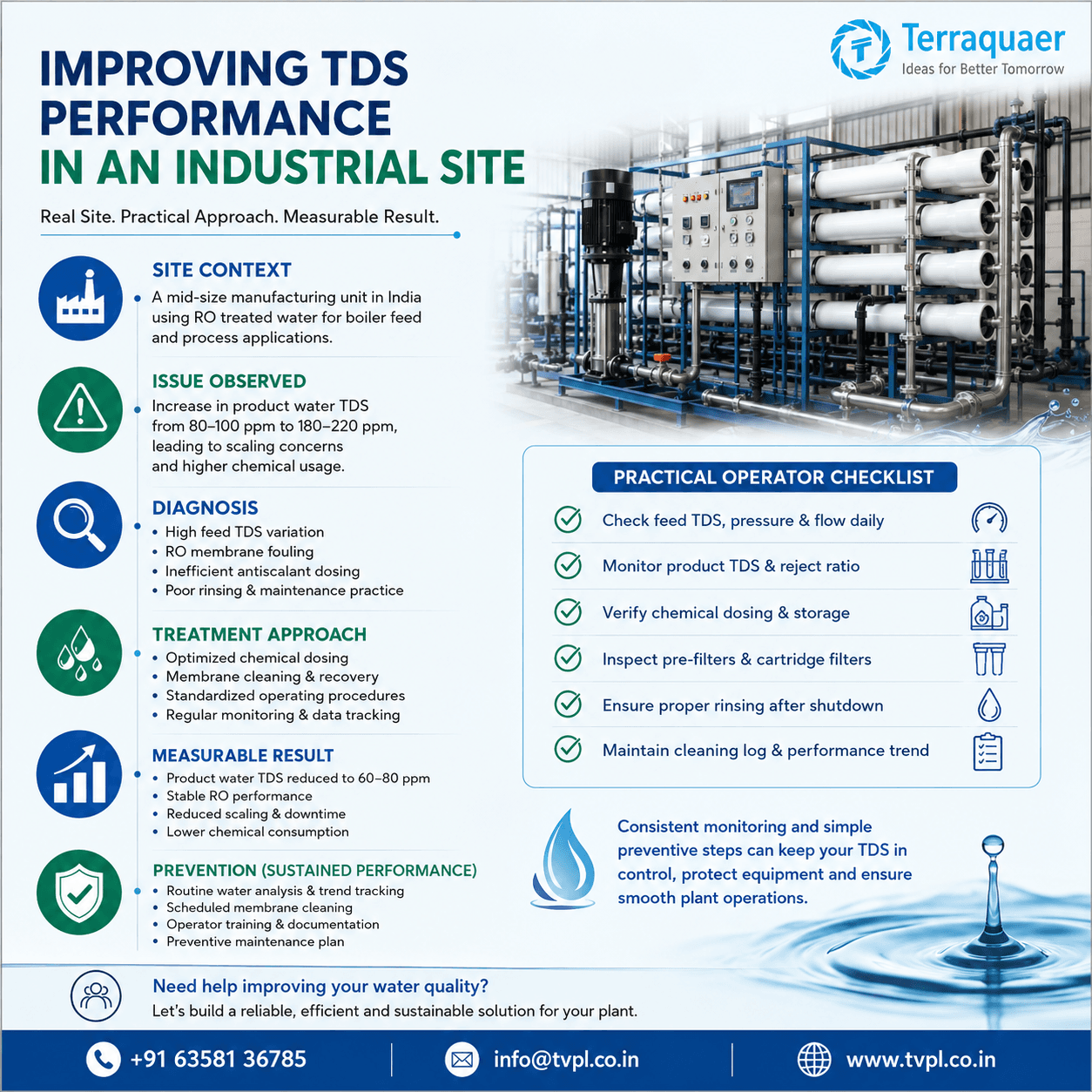
A manufacturing facility in India was using RO-treated water for process applications and boiler feed. Over time, operators observed a gradual increase in product water TDS, resulting in concerns about scaling, increased chemical consumption, and inconsistent plant performance.
This type of situation is common across industries where RO systems operate continuously under varying feed water conditions.
Issue Observed
The plant experienced:
- Product water TDS increasing beyond normal operating levels
- Scaling tendency in downstream equipment
- Higher chemical consumption
- Reduction in overall RO performance
- Increased maintenance requirements
Ignoring these early signs can eventually lead to membrane damage, higher operating costs, and unplanned downtime.
Diagnosing the Root Cause
Improving TDS performance starts with proper diagnosis rather than immediate corrective actions.
The investigation identified several contributing factors:
- Variation in feed water TDS
- RO membrane fouling
- Improper or inconsistent antiscalant dosing
- Inadequate membrane cleaning practices
- Lack of performance trend monitoring
Each of these factors can individually or collectively reduce salt rejection efficiency and increase product water TDS.
Treatment Approach
A systematic improvement program was implemented to restore RO performance.
1. Optimize Chemical Dosing
Chemical dosing was reviewed and adjusted based on actual feed water quality to improve membrane protection without excessive chemical consumption.
2. Restore Membrane Performance
A planned membrane cleaning program was carried out to remove fouling and restore salt rejection efficiency.
3. Standardize Operating Procedures
Operators followed standardized operating practices for startup, shutdown, flushing, and routine inspections to ensure consistent system performance.
4. Monitor Performance Regularly
Key operating parameters were tracked daily, including:
- Feed water TDS
- Product water TDS
- RO recovery
- Reject ratio
- Operating pressure
- Flow rates
Regular monitoring helped identify deviations before they became major problems.
Practical Operator Checklist
Simple daily checks can significantly improve RO reliability.
✔ Check feed water TDS, pressure, and flow rate
✔ Monitor product water TDS and reject ratio
✔ Verify chemical dosing system operation
✔ Inspect cartridge filters and pre-treatment units
✔ Ensure proper flushing after shutdown
✔ Maintain cleaning records and performance trends
These practices help detect issues early and reduce maintenance costs.
Results Achieved
After implementing corrective measures, the plant experienced:
- Improved product water quality
- Stable RO system performance
- Reduced scaling tendency
- Lower chemical consumption
- Fewer maintenance interruptions
- Better overall operational reliability
The improvements were achieved through better process control and preventive maintenance rather than major equipment modifications.
Preventing Future TDS Problems
Long-term performance depends on consistency rather than one-time corrective actions.
Industries should focus on:
- Routine water quality analysis
- Scheduled membrane cleaning
- Regular calibration of monitoring instruments
- Preventive maintenance of pre-treatment systems
- Operator training and documentation
- Performance trend analysis
A preventive maintenance approach helps extend membrane life, reduce operating costs, and maintain stable water quality.
Conclusion
Improving TDS performance is not simply about reducing a number on a meter—it is about maintaining the overall health of the water treatment system. Proper diagnosis, optimized operating practices, and continuous monitoring enable industries to achieve reliable RO performance while minimizing downtime and operating expenses.
Whether the application involves process water, boiler feed, or utility systems, a structured approach to TDS management contributes to improved efficiency, equipment protection, and long-term plant reliability.